A practical learning format built around studio decisions
The lessons are written for interview and discussion sets: camera line, coverage packages, basic lighting that reads across angles, and the directing communication that keeps a studio calm. This is education only—FERI Beheer B.V. does not provide production services, equipment rental, talent booking, or career placement.
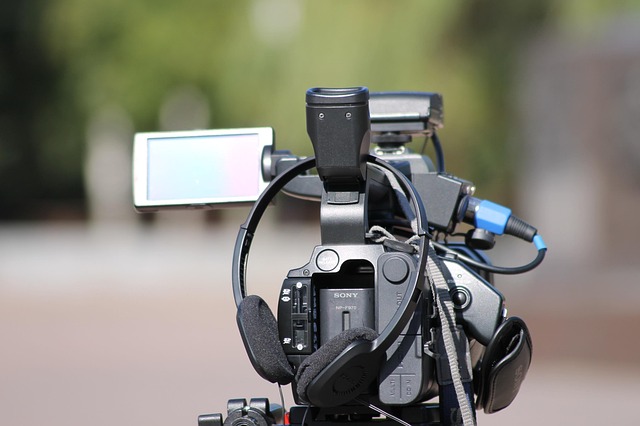
Page photo subject
Over-the-shoulder view from behind a studio camera operator filming an interview desk.
"camera operator filming interview desk"
What “learning” means here
Each course is built as a series of studio decisions that produce tangible outputs. A learner does not “watch a lesson and move on.” You will write a short run-of-show, draft a shot list that can be called on set, sketch a camera plan that respects the 180-degree rule, and make lighting choices that remain stable when you cut between angles.
The emphasis is on interview and conversation formats because they punish inconsistencies. If the wide shot drifts, if singles mismatch in size, or if the key direction flips between cameras, the edit becomes a patchwork. The exercises are designed to make those failure points visible early, using simple setups that can be repeated. Instructors use the same language crews use: “hold the wide,” “protect the eyeline,” “reset the chair mark,” and “keep the background separation consistent.”
We do not teach production for hire. There is no equipment rental, no studio booking, no talent sourcing, and no promise of professional outcomes. The courses are paid educational programmes that focus on practical craft and methodical preparation.
A shot list that a crew can actually read
Every course uses a consistent naming style for shots: short labels, framing notes, and conditions for when a camera is “live.” You will also write what an editor needs to know: which shot protects continuity, where you expect cut points, and which inserts are optional.
This is where “coverage mindset” becomes concrete. A good list anticipates overlap, laughter, and interruptions without panicking. You will learn to build a minimal package first, then add cutaways that are justified.
Camera plan as geometry
You will map where cameras sit relative to eyelines and table shape. We treat cross-coverage, angle offsets, and screen direction as simple rules you can re-check quickly during a reset.
Lighting checks across angles
Exercises focus on key direction, fill control, and spill management that reads the same on the wide and on singles. The goal is stability, not a gear catalogue.
Communication drills for a quieter set
You will practice short callouts for hosts and crew: how to request a posture change without breaking confidence, when to hold for a reset, and how to protect pace. Small, precise language is part of directing.
Editorial intention notes
A short written note accompanies each assignment: where you expect cuts to land and what coverage protects those moments. It keeps “coverage” honest.
The assignment loop (what you do, step by step)
Studio work is repetitive in a productive way. The same setup runs through different guests, different questions, and different energy levels. The learning format mirrors that: you build a baseline, run a controlled test, then adjust one variable at a time. That is how you learn what matters in the edit.
The steps below are used across all three courses. The foundation level keeps the loop small; the advanced level expands it into a full day workflow with segment transitions, pickups, and explicit handoff notes for post-production. Throughout, we keep the focus on seated interview and table discussion formats—no feature film blocking, no social growth strategy, and no production-for-hire framing.
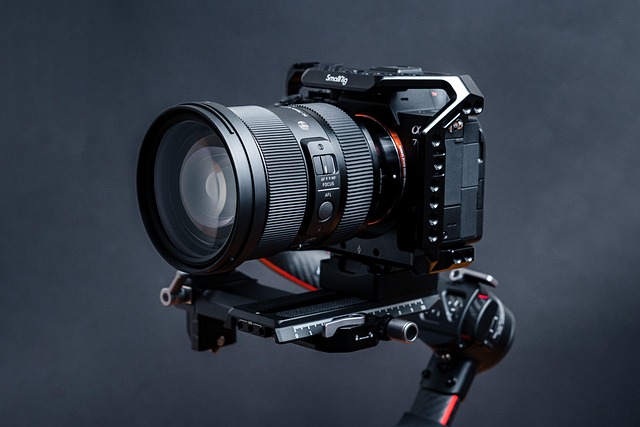
Section photo subject
A professional video camera on a tripod or pedestal with a printed shot list beside it.
Stock query: "professional video camera on tripod with shot list"
-
01
Define the format and the constraints
You start with the unglamorous facts: talking-head, two-person interview, or table discussion; how many minutes; what the host needs to do; and what the editor must be able to cut. This produces a short format sheet with a coverage minimum and any “no-fail” moments (for example, an introduction that needs a wide plus a single).
-
02
Build the camera plan and lock the camera line
You place the wide first as a continuity anchor, then place singles to preserve eyelines and screen direction. The course materials teach a repeatable way to check angle offsets and shot sizes so that cuts do not feel like accidental zooms. You will write a simple camera plan that can be read during a reset.
-
03
Light for stability, then verify on each angle
You establish a consistent key direction that reads on the wide and on singles. Then you test the weak points: shadows that flip, spill that changes with camera position, and backgrounds that look fine in one lens but fall apart in another. The goal is not a “look,” but a stable baseline that does not force fixes in post.
-
04
Run a short rehearsal and practice callouts
You rehearse a small portion of the format: an intro, a transition, and a few answers. The exercise is to correct without noise. You practice short callouts (“hold,” “reset,” “slower,” “eyes to host”) and decide when not to interrupt. The outcome is a cleaner run and fewer mid-sentence technical corrections.
-
05
Write a brief editorial intention and review the footage
Each assignment ends with a short edit note: where you would cut, why the wide is or is not safe, and which shot protects overlapping dialogue. You then compare your plan to what you actually captured. This is how you spot coverage gaps and learn what to simplify for the next run.
What is reviewed (and what is not)
The course materials use checks that can be applied regardless of camera brand. When a technical setting matters, it is treated as a principle. For example: “match white balance across cameras” is a workflow requirement; the exact menu path depends on your system. The review criteria stay close to what an editor and a studio director notice first.
Framing consistency
Headroom, shoulder line, and shot size are checked across the whole segment. We pay attention to small drift: chairs creeping, posture changes, and shots getting tighter without a reason. The aim is a stable frame that does not pull attention.
Coverage logic
We check whether the wide can hold continuity, whether singles preserve eyelines, and whether cross-coverage violates screen direction. If a cut feels like a jump, the first step is to diagnose camera line and shot size, not to “add more cameras.”
Lighting stability
Key direction, fill ratio, and spill are reviewed as they appear across angles. A setup can look fine in one lens and break in another. The exercises include camera-by-camera checks so your look does not collapse when you cut.
What is not reviewed: we do not judge equipment ownership, studio size, or production budgets. We also do not provide employment or client acquisition guidance. The goal is to teach a method: plan coverage, execute calmly, and capture footage that an editor can cut without constant rescue work.
Ready to compare levels?
The Courses page lists all three programmes in full: who they are for, what is covered, format, duration, and price in euros (EUR). If you have a specific studio scenario, send a short description and we will point you to the most relevant level.
Ask a question about your setup
If you describe your format (talking-head, two-person interview, or table discussion), we can suggest which course level is the closest match and which section to start with. We respond with practical guidance and references to the course outlines. This site does not provide production services.
Registered location (Netherlands)
De Koppel 11, 5674 NW Nuenen, NetherlandsPhone
+31 40 211 7846What to include in your message
- Format: talking-head, two-person interview, or table discussion.
- Camera count and the coverage you currently capture (wide only, wide + single, etc.).
- What breaks first: eyelines, shot size mismatch, lighting inconsistency, or on-set communication.
We use your details to reply and improve course clarity. We do not sell contact data. Typical response time is within 1 business day (Monday to Friday), excluding Dutch public holidays.
Prefer email? Write to [email protected].